Showing posts with label Israel. Show all posts

Saturday, June 17, 2006

Separation between Church and State


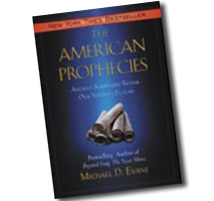
I believe Michael D. Evans has stated it very well in his book The American Prophecies. Rather than try to reword it, I'll just let you read his words for yourself.

"The United States was built on Christian principles, with the Ten Commandments and the laws of the Bible as the basis for its own laws. The newly born nation refused tyranny, creating a constitution of checks and balances to control government power, and also refused to embrace old-world struggles - such as that of Christian against Jew - as part of its culture. The fledgling government took literally the Scripture 'Old things are passed away; behold, all things are become new' (2 Corinthians 5:17). This admonition was the true source of the idea of 'separation between church and state,' that all faiths would have the right to the freedom of religious gathering, worship, and expression, and that the state would not dictate what church was attended, nor would it silence anyone from expressing their faith in public office or the halls of government. (emphasis added)"

I find the very last statement I've put in italics quite interesting since currently America is doing quite the opposite based on new interpretations of our founder's original intentions.

Wednesday, May 03, 2006

Passover - Fulfillment


The symbolism of Passover was fulfilled by Jesus when He first came to this earth as our Messiah. Here are some examples:

1. Three matzahs & breaking of the middle matzah
Rabbinic tradition has held that the three matzahs represent the three types of Jewish people: the priests, the Levites, and the Israelites. Another tradition says they represent the three patriarchs: Abraham, Isaac and Jacob. Yet neither of these explain the broken matzah.

The three matzah represent the trinity of the Godhead: Father, Son and Holy Spirit. The middle matzah which is broken represents the Son, Jesus. He was broken (died), wrapped and hidden away (buried) and brought back at the third cup of wine (resurrection on the third day).

2. Passover Lamb
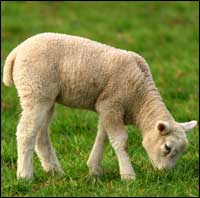
Passover foreshadowed the Jewish Messiah as the true Passover Lamb, as spoken about by Isaiah (Isaiah 53). He would be innocent and pure. He would shed His blood to provide deliverance for the nations.

Monday, May 01, 2006

Passover - Part 2


It's been awhile since I last wrote about the Feasts of the Lord. We are starting to study the End Times in my simple church on Tuesday nights. This should go along well with the three fall feasts since they relate to Christ's second coming.

There is so much I could write about Passover, but I'm going to let you do more research if you are interested. I can give you some resources that I've found but I want to get on to the other Feasts as well. I could probably continue to write about Passover for quite some time if I let myself.

Today, I'm going to share with you the meaning of the four cups of wine from the Passover meal.

The First Cup - This cup is poured by the father who asks everyone to rise. He then raises the cup to heaven and recites the prayer of sanctification (Kiddush). This sets the day apart to God.

Blessed art Thou, O Lord our God, King of the universe, Who createst the fruit
of the vine. Blessed art Thou, O Lord our God, Who hast chosen us for Thy
service from among the nations . . . Blessed are Thou, O Lord our God, King of
the universe, Who hast kept us in life, Who hast preserved us, and hast enabled
us to reach this season.

Jesus said the Kiddush as the leader of the Seder service in the Upper Room.
"Then He took the cup, and gave thanks." Luke 22:17

The Second Cup - The second cup is poured and in response to four questions a lengthy narrative of the Passover story is shared beginning with Abraham in Ur. As the ten plagues are described a tiny bit of wine is poured out for each plague to represent the sorrow felt for the Egyptian's suffering. Once the first half of the praise psalms (Hallel) is recited the second cup is taken.

The Third Cup - This is called the Cup of Redemption. It is at this point that Jesus instituted the Lord's Supper as we know it as a reminder of His redemptive work on the cross. Since Passover is closely associated with the hope of the coming of the Messiah, a child is sent to the front door after the third cup to welcome in the prophet Elijah. It is believed based on scripture that he would appear, drink the cup and announce the Messiah.

"I will send you Elijah the prophet Before the coming of the great and dreadful day of the Lord." (Mal. 4:5)

The Fourth Cup - Known as the Cup of Acceptance or Praise. This is the cup that Jesus said He would not drink until He drank it with His disciples in the Kingdom. Jesus realized His time of acceptance by the Jews was still yet in the future.

As I said above there is so much more to this celebration and meal which I encourage everyone to look into further. At this time though I'll be moving on the the next Feast of the Lord, the Feast of Unleavened Bread after I post regarding the fulfillment of Passover by Jesus, the Messiah.

Here is a site I've found with alot of information about the Passover celebration

Judaism 101 - Pesach: Passover

Friday, April 21, 2006

Passover - Part 1

I know Passover for this year has already passed, but since I'm still doing a study of the Lord's Feasts and this is the first one, that is what I'll be talking about today.

First I want to say I attended a Passover dinner put on by a local church this year. We actually did this on Friday night (4/14) although the actual Passover began this year at sundown, April 12th. Passover was meant to be celebrated in a smaller intimate setting than what I experienced from this Passover meal, however it was a wonderful learning opportunity for me. I believe my house church group (about 12 of us, not counting the children) will be celebrating next year in a more intimate setting.

"On the fourteenth day of the first month at twilight is the Lord's Passover." (Lev. 23:5)
Nisan 14th

Exodus 11 - In this chapter the 10th plague is described as occurring at midnight when God would pass through the land and kill the firstborn of all families and cattle.

Exodus 12 - God outlines the steps to be taken by His people who trusted Him in order to avoid the plague, in order to be "passed over".


Requirements for Passover

* A year old male lamb, perfect with no flaws or defects was to be taken from the flock on the 10th of Nisan

* For four days the family was to take the lamb into their homes to ensure it was fit for the sacrifice and to become attached to the lamb. In this way the lamb became "their lamb".

* At sunset on the 14th day of Nisan the lamb was to be publicly killed and the family was to apply the blood of the lamb to their doorpost.

* The innocent lamb became a substitute so the Lord's judgment "passed over" the family.

At the time of the first (and true) Passover, the month of Nisan became the first month in the Jewish religious calendar.


God's requirements for the Passover Meal

God required three items for the Passover Meal to be eaten:

1. Lamb - a young lamb was chosen to symbolize innocence. It was roasted over a fire to symbolize the judgment of the first born

2. Matzah (unleavened bread) - this symbolized the purity of the sacrifice because leaven symbolized sin.

3. Bitter Herbs - served as a reminder of the suffering of the lamb (and of the Jews as slaves in Egypt).


Importance of Passover

1. There was only one Passover when the Lord passed through the land as judgment. All other celebrations since then have been a memorial to this one true Passover.

2. Passover is the oldest, continuously observed feast in existance today. It has been celebrated for some 3,5000 years.

3. Even today more Jewish people observe Passover than any other Jewish holy day.

4. Passover was so important to the Lord that He allowed those who could not celebrate on the 14th of Nisan (those defiled by touching a dead body or who were away on a long journey) to celebrate Passover 30 days later on the 14th of the second month. This is the only holy feast for which He made an accomodation such as this.
Thursday, April 20, 2006

Heart relationship v. external requirements

I've started posting (and will continue to do so) regarding the Feasts of the Lord. These are feasts the Lord appointed in the Old Testament. Many Christians are now taking an interest in these feasts and their meaning in relation to the Messiah.

However, in the Old Testament the Lord says the following about his appointed feasts. . .

"I hate all your show and pretense - the hypocrisy of your religious festivals and solemn assemblies." (Amos 5:21)

"I hate all your festivals and sacrifices. I cannot stand the sight of them!" (Isaiah 1:14)

He is referring to the same feasts that I've been studying. Why does he tell the Jews to celebrate these feasts and then make these comments about those same feasts?

The answer has to do with the hearts of the Jews at the time. They were celebrating the festivals and making sacrifices to God because it was their "duty". It was what they were supposed to do, not because they loved the Lord. God looks at our hearts today as well. Going to church on Easter and Christmas, or even attending church every Sunday is not pleasant in the Lord's sight if we are doing it because that is what is expected of us. He wants us to do so because we are in a relationship with him and we love Him. Without the relationship, the feasts are meaningless.

The interest I have in these feasts stems from not only the fact that the Lord told the Jews to celebrate them, but also because they represented the love He had for them. In addition, the feasts point to the Messiah and God's ultimate love for us. I want to learn more about these feasts because I love the Lord and I'm in a relationship with Him, not because it is expected of me. In everything we do for the Lord, we need to ask ourselves what our motives are. If we are not doing it out of love, we might as well not do it.

"You shall love the Lord your God with all your heart, with all your soul, and with all your strength. And these words which I command you today, shall be in your heart." (Deut. 6:4-6)

"You shall love the Lord you God with all your heart, with all your soul, and with all your mind." (Matthew 22:37-38, spoken by Jesus, our Messiah)

God's ulitmate desire for us is to be in a love relationship with Him. Obedience will stem from this. These feasts, church attendance, good deeds, etc are all just a shadow of who Jesus is, they are a shadow of the love He holds for us. Make sure you are chasing the person, not the shadows.

Thursday, April 13, 2006

Spring Feasts

The four Spring Feasts consist of:

1. Passover
2. Feast of Unleavened Bread
3. Feast of Firstfruits
4. Feast of Weeks

Passover:

This is the foundation of all the other feasts as the other six build upon this one. It is celebrated on the 14th of Nisan (March/April). It also begins the the religious year.

In Egypt over 3,500 years ago, the only true Passover was celebrated when a lamb was sacrificed and it's blood applied to doors so the home was "passed over" and the firstborn spared.

There has also only been one true fulfillment on this holiday. This occured over 2,000 years ago when Jesus the Messiah was pierced and His blood was spilled on the cross to spare the world of the eternal consequences of sin.

Interestingly, at the time of the Jewish exodus from Egypt, the Pharaoh was considered to be a god, therefore in their eye's god's son died when the Pharaoh's firstborn died on that original Passover.

The Hebrew slaves were "redeemed" in Egypt by the sacrifical lamb's blood. These lambs pointed to the one true Lamb of God who redeems the world.

Feast of Unleavened Bread:

This feast begins the day after Passover (15th of Nisan) and lasts for seven days. The first and seventh nights are a time of meeting or convocation between God and man. With the passing of time this holiday has come to be observed with Passover by many.

One ancient custom or tradition during this time is to sprinkle bread crumbs (leaven) throughout your house. Then the leaven is swept up, taken outside and burned. The leaven symbolizes error or evil.

Feast of Firstfruits:

This feast occurs on the second day of the Feast of Unleavened Bread or the 16th of Nisan. At this time the barley harvest (the first crop planted in the winter) is beginning to ripen. The first sheaf is cut and presented to the Lord. The acceptance of the firstfruit by the Lord is an "earnest" or pledge on His part for a full harvest.

Feast of Weeks (Shavuot):

This occurs seven weeks and one day after Firstfruits (50 days). This is also called Pentecost (meaning fiftieth). During this the Hebrews would bring two loaves of bread with leaven (yeast) in them to offer to the Lord. The loaves represent the Jews and the Gentiles and the leaven in the bread reprsents that we are still not yet without sin in our lives.

Spring Feasts Summary:

1. Passover: Redemption
Messiah the Passover Lamb has been slain for us.

2. Unleavened Bread: Sanctification
Messiah was set apart. His body would not decay in the grave.

3. Firstfruits: Resurrection
On the 3rd day Jesus rose from the grave. He was the firstfruits of the
eternal bodily resurrection that awaits all Believers.

4. Feast of Weeks: Origination
Represents the coming of the Holy Spirit to Christ's Believers.

Note: Each major event of the Messiah's first coming occurred on the precise date of the appropriate Jewish holiday.

Jewish Time

In order to better understand how the Jewish feasts are celebrated it is beneficial to understand how time is measured from a Jewish religious viewpoint.

The Jewish Day

In Genesis 1 God refers to the day as consisting of “the evening and the morning”. The Jewish day is consistent with this, first evening or night hours and then morning or daylight hours. Therefore, the Jewish day begins at sundown and continues to the next sundown. The Jewish holidays also begin at sundown.

For example, this year Passover begins at sundown April 12th (yesterday) and ends at sundown, April 13th (today).

The Jewish Week

The Hebrew week consists of seven days similar to our traditional calendar, however they do no have specific names for the days of the week. They are known as “the first day”, “the second day” and so forth. The seventh day, however is known as the Sabbath or a day of rest. This originates in Genesis when the Lord created the world in six days and rested on the seventh day, not because he was tired (God never grows tired) but because he was satisfied with His work. The seventh day or Sabbath falls on our calendar as sundown on Friday to sundown on Saturday.

The Jewish Month

The Hebrew calendar is based on a lunar month. The month begins with each new moon and therefore usually alternates between 29 and 30 days. The first day of every month is known as Rosh Hodesh (the Head of the Month) and was considered a day of rest. It is considered to be a minor holiday.

The Jewish Year

The Hebrew calendar is based on a compromise between a lunar and solar reckoning (our current calendar is based largely on a solar reckoning). The average length of a month is 29 ½ days. The normal Jewish year consists of 12 months or approximately 354 days. Since the holidays were to be kept within the appropriate seasons and this lunar reckoning is 11 days less than our solar reckoning (which is the basis of the seasons) a compromise was needed to avoid the holidays being celebrated in the wrong seasons after the passing of the years.

Therefore, the Hebrew calendar is based on a 19 year cycle, in which there are leap years the third, sixth, eighth, eleventh, fourteenth, seventeenth and nineteenth years. During the leap years an extra day is added to the month of Adar and a thirteenth month (29 days known as Adar Sheni) is added to the calendar. This is why the Jewish holidays appear to jump around on our traditional calendar. Passover tends to fall somewhere in March/April and the fall feasts occur in September/October.

Since the Hebrew’s exodus from Egypt the new year has begun with Passover (March/April on our calendar). The Hebrews celebrated two New Years, the religious new year began with Passover and the agricultural new year began after the harvest.

The following are the month of the Jewish calendar (based on the religious New Year)

1. Nisan: 30 days
2. Iyar: 29 days
3. Sivan: 30 days
4. Tammuz: 29 days
5. Av: 30 days
6. Elul: 29 days
7. Tishri: 30 days
8. Heshvan: 29 or 30 days
9. Kislev: 29 or 30 days
10. Tevet: 29 days
11. Shevat: 30 days
12. Adar: 29 days (30 days in leap years)

Feasts of the Lord - Summary

Seven is the biblical number for perfection and completion and God instituted only seven major holidays. In Leviticus 23 all seven holidays are listed in chronological order. These seven holidays tell the story of our Messiah, Jesus Christ. They represent the sequence, timing and significance of the major events of the Lord’s redemptive plan for humankind. Jesus fulfills the spiritual realities of each of these seven feasts.

Four of the feasts occur in the spring and three occur in the Fall. The four in the spring were fulfilled by the Messiah during his first coming over 2000 years ago. The three fall holidays represent specific events associated with Christ’s second coming in the future.

Monday, April 10, 2006

Feasts of the Lord

Quite a few years ago, my aunt who is currently living in Australia had talked to me a bit (via email) about the Feasts of the Lord, of which Passover is probably the most known by those not of Jewish descent. At the time I was not yet ready in my walk with the Lord to put much weight on these events.

However, over the years our conversations have been at the back of my mind, poking up their heads every once in awhile. They've really come to the forefront of my mind in the past year as my church has moved from a traditional church to a house church. As a group the Lord has been planting a desire in our minds and hearts to learn more about these Feasts. (You can read more about this desire in Traver's blog, Zadok Priest. Traver is one of our elders who used to be the pastor of our church. His is an amazing story of how the Lord has transformed his mind and heart over the past years. A link to his blog is on my sidebar).

One of the traditional churches in my area is doing a Passover meal this Friday evening which I am excited to be participating in. My understanding is they will be explaining the original roots of this feast as well as how Jesus has fulfilled the meaning of the feast. Look for a posting regarding this later this weekend.

I'm currently reading a book called Feasts of the Lord which I will be periodically sharing from in this blog. I find these feasts very interesting and fulfilling. It is amazing to not only understand the original intent of these feasts but also how the Lord has used these feasts to foreshadow Jesus' first and second coming. These are the things I'd like to share in my blog. Keep an eye out for more information!